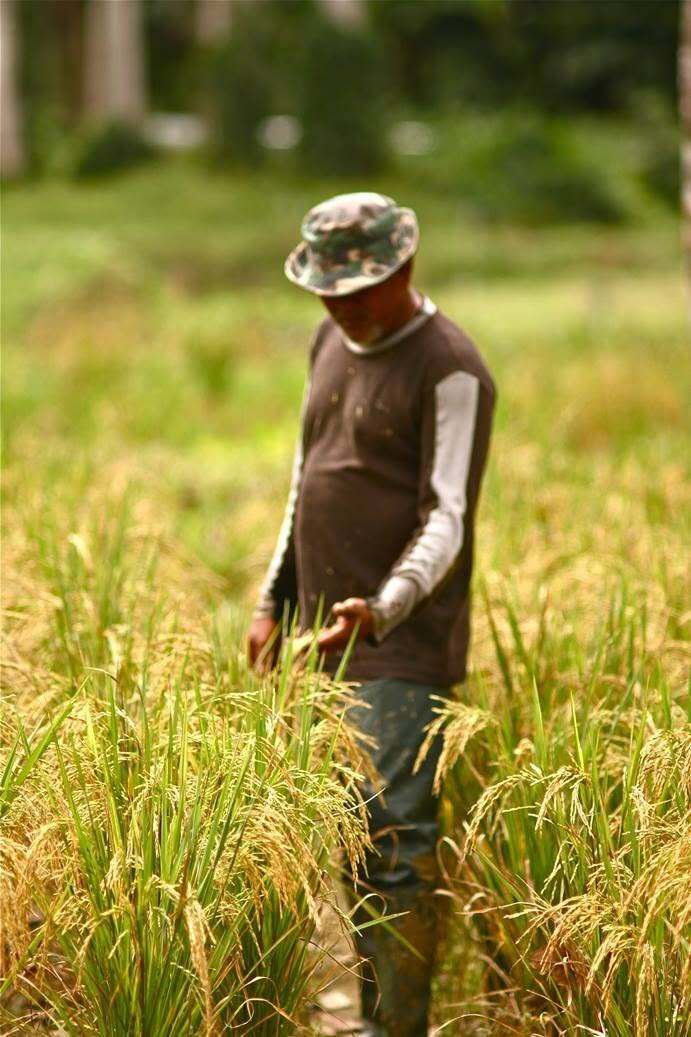
Founded in 2009 by Kapten Zakaria, with the support of Haji Marzuki of KEDA, SRI Lovely began as a village cooperative built on a simple belief: by bringing back traditional ways of rice farming, we can produce safe and healthy food while creating meaningful livelihoods for rural communities.
For more than a decade, SRI Lovely has practised the System of Rice Intensification (SRI) with zero chemical inputs. Our commitment to organic farming was formally recognised when the farm received MyOrganic certification in 2014.
Beyond growing rice, SRI Lovely has become a place for learning, knowledge exchange and community engagement. Over the years, we have organised educational workshops and events for local and international participants, as well as volunteering and internship programmes that connect people with farming, nature and rural life.
Today, Sri Lovely is taking another step forward.
Through our newly formed Pertubuhan Lembah Organik, a registered non-profit organisation, we aim to broaden our work by advocating for sustainability through partnerships, education, community engagement and ecological stewardship.
Our work contributes to the United Nations Sustainable Development Goals (SDGs), particularly SDGs 1, 2, 4, 6, 12, 13, 15 and 17—from reducing rural poverty and supporting food security, to sharing knowledge, caring for water and ecosystems, promoting responsible production and building meaningful partnerships for sustainable development.
What began as a village initiative has grown into a living example of how agriculture can connect food, people, nature and community.
We believe the future of farming is not only about what we grow, but also about how we care for the land, how we support the people who work it, and what we leave for the generations that follow.

"We must look after our rice with full of love; every single grain of rice is like a drop of a farmer's sweat."
The System of Rice Intensification (SRI) offers a different way of growing rice — from a single seed, one planting point and more room to grow. At SRI Lovely, some of the best seeds are chosen, seedlings of around one week old are planted individually, approximately one foot apart, giving each plant space to develop. During the vegetative stage; water is applied only enough to keep the soil moist. Regular weeding helps control competing plants while disturbing and aerating the soil, creating better conditions for the rice roots to grow.
At SRI Lovely, not a single drop of synthetic chemical is used. SRI is combined with organic and no-chemical practices that nurture the soil and support the wider living ecosystem of the paddy field. The farmer observes the soil, plants and water closely, responding to the changing conditions of the field rather than relying heavily on external inputs. In this way, SRI brings knowledge, observation and skill back to the centre of farming — reconnecting people with the land and the food they grow, thus consume food responsibly.
The way rice is grown also matters for the climate. Continuously flooded rice fields create oxygen-poor conditions that encourage the production of methane (CH₄), while synthetic nitrogen fertilisers are an important source of nitrous oxide (N₂O) emissions. By keeping the soil moist rather than continuously submerged and using zero synthetic chemical inputs, SRI Lovely seeks to reduce these sources of agricultural greenhouse-gas emissions. For us, growing rice is therefore more than producing food — it is about caring for the soil, protecting biodiversity, reducing our climate footprint and keeping the knowledge of rice farming alive.
"When we do good, good will come back"
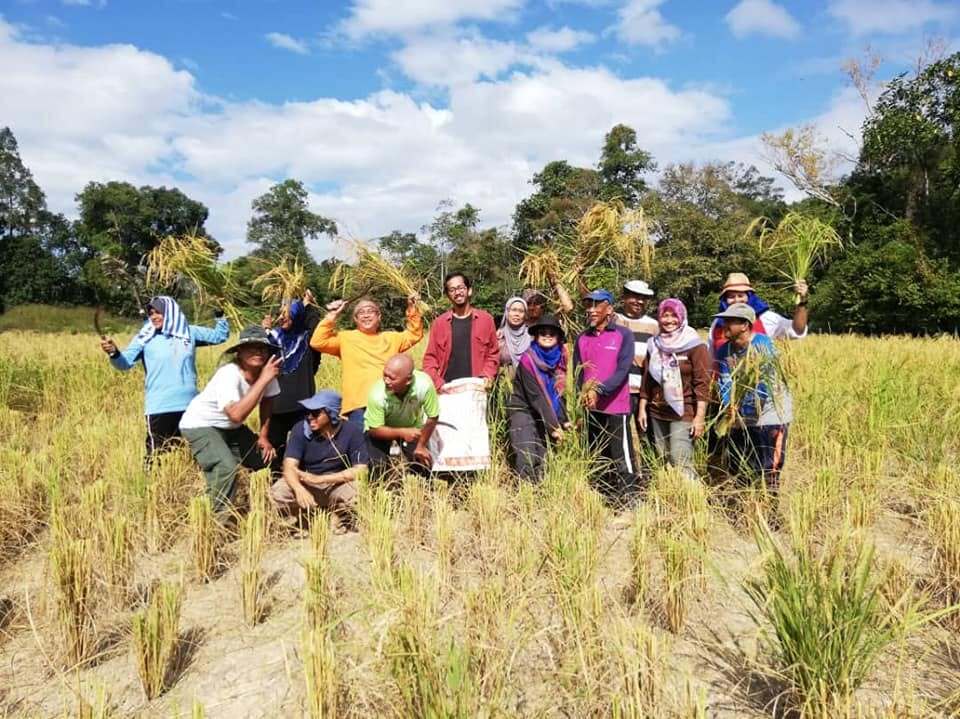
SRI Lovely is more than a place where rice is grown. It is part of a rural livelihood built around farming, knowledge and community. By keeping rice cultivation active, the farm creates opportunities for local people to work, learn, participate and earn while maintaining their connection with the land. It demonstrates that rural agriculture can be more than a means of production — it can be a foundation for community resilience, knowledge and a living rural economy.
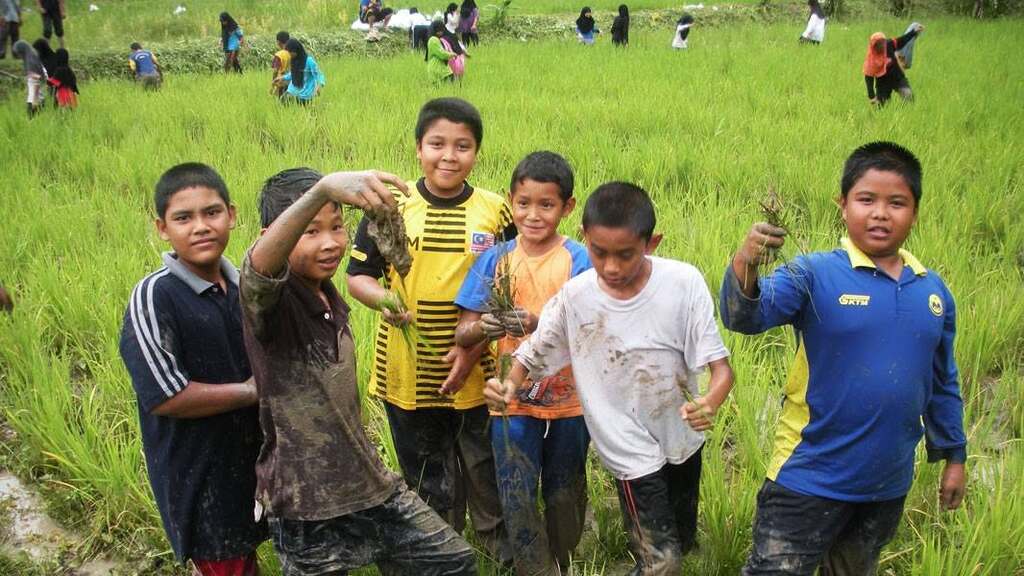
But the work does not stop at the farm. Through outreach programmes, training, farm visits and knowledge-sharing activities, SRI Lovely shares its experience with other farmers, rural communities, students, volunteers and organisations. Some that has since benefitted are the rice farmers community in Ba'Kelalan, Sarawak and Kampung Tambatuon in Sabah, to name a few. The aim is to encourage more people to explore sustainable and chemical-free approaches to farming, develop practical skills and find ways to strengthen their own communities.
When one community learns, it can help another community grow. By sharing knowledge beyond the farm, SRI Lovely hopes to contribute to a wider movement of rural communities keeping agriculture alive, caring for the land and building livelihoods that can endure for generations.

"This land belongs to our grandchildren, we have to take care of it"
A rural landscape is shaped not only by nature, but by the people who live and work within it. For generations, rice farming has provided rural communities with livelihoods while maintaining a close relationship between people, land, water and biodiversity. When farming remains alive, the landscape remains alive too. A healthy rural economy can therefore play an important role in caring for the landscape itself.
When rural livelihoods disappear, the rural landscape is under threat. Paddy fields abandoned, farming knowledge fade, and the rural landscape can become vulnerable to forms of development driven by very different economic priorities. What replaces a living rural economy may bring greater resource consumption, pollution and pressure on biodiversity.
At SRI Lovely, we believe that preserving rural heritage means keeping rural life economically, socially and ecologically meaningful. By keeping rice farming alive, supporting rural livelihoods, sharing knowledge and caring for the land, we are helping protect more than a way of farming. We are helping sustain a living landscape, its rivers, its scenic view, biodiversity and the communities that have shaped it for generations.
A Living Rural Economy. A Living Landscape. A Living Heritage.
“A glimpse of SRI Lovely”
Sri Lovely's work has been featured and recognised by international organisations working on sustainable food systems, agriculture and conservation.

Worldwide, rice production accounts for over 10% of total methane emissions. The vast majority of these come from organisms dying and decomposing in anaerobic environments, such as when paddy fields are flooded, which also reduces soil diversity, killing off beneficial soil organisms such as worms and bacteria. At Sri Lovely, however, the rice plots are not flooded but rather kept ‘moist’, and often drained.

This FLS is a paddy field that functions as agricultural land and a learning center for various farmers, volunteers, students, and researchers. They use SRI (System of Rice Intensification) methods and do not use chemical pesticides. Students at various levels, from undergraduate to postdoctoral, from different institutions and countries, are constantly involved in this learning ground, which provides excellent knowledge.

Zakaria, who is a pioneer of SRI in Malaysia and SRI trainer in ASEAN region, said farmers are important people because they provide food for their families and others.
“It is important to have good and ethical farmers who produce safe and healthy food for the people using sustainable and organic farming methods like SRI as the way forward,” he said.

Farmers from around the country gathered at Sri Lovely for a four-day conference with the goal of creating a dynamic network of local farmers..

We reflect on the natural approach to paddy farming that older generations of farmers practiced. Can past natural farming methods hold the key to a more sustainable future paddy farming in Malaysia?